Research

Seeing energy materials
in motion.

Diyi Cheng studies the short-lived events that determine how energy materials form, perform, and fail. The research combines direct observation with synthesis, electrochemistry, and complementary measurements to turn those mechanisms into testable design rules.

Independent research vision

Three connected directions follow materials from formation, through operation, to failure.

Direction 01

Formation pathways

This direction examines how precursor chemistry, solvent, and temperature select phases and defects during disordered-rocksalt synthesis. Direct visualization of crystallization, in situ imaging, diffraction, and matched bulk synthesis provide a basis for defining predictive processing windows.
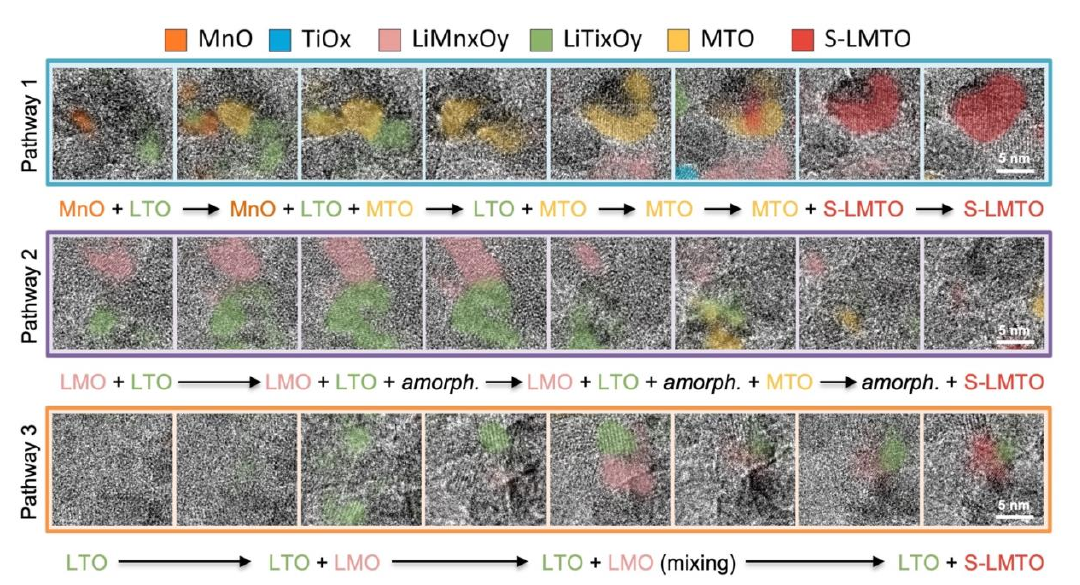
Three rows of in situ electron microscopy frames showing distinct nanoscale crystallization pathways during heating.
Crystallization pathways observed during in situ heating. Cheng et al., Advanced Functional Materials (2026)
Direction 02

Buried battery interfaces

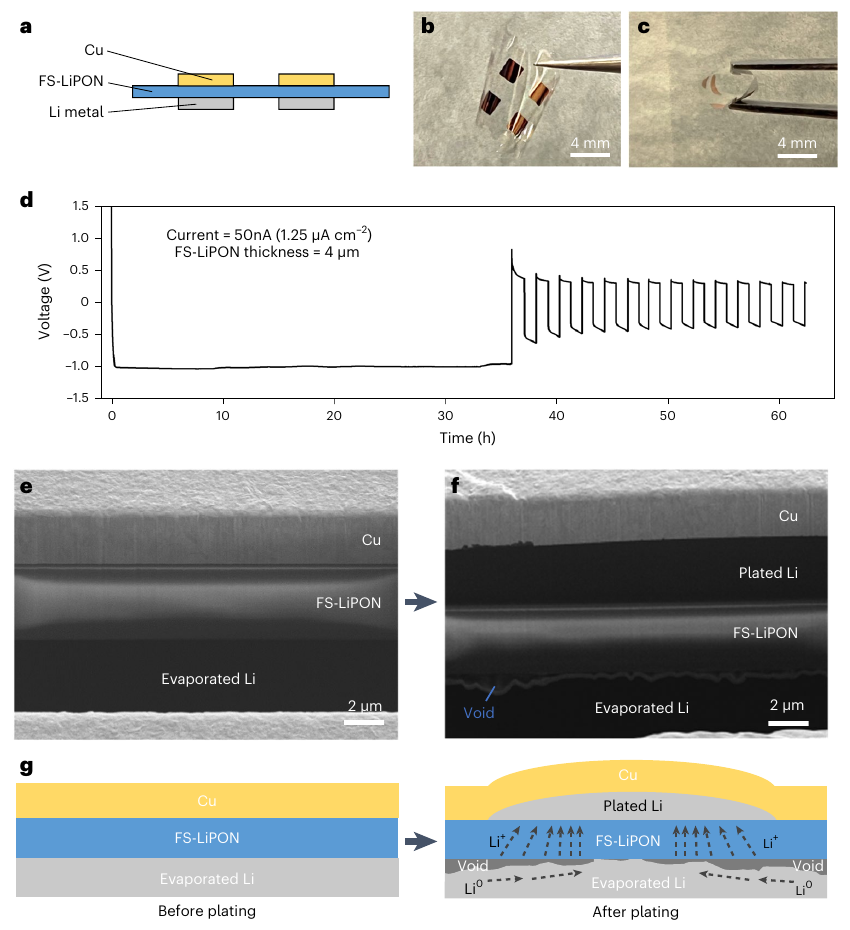
LiPON thin-film cells provide controlled systems for isolating how interphase chemistry, lithium deposition, and contact loss affect solid-state batteries. Cryogenic microscopy, electrochemistry, and cycling connect local interface structure with device behavior and provide rules to test in other solid electrolytes.

A free-standing LiPON cell, its plating and stripping voltage trace, and cross-sectional images before and after lithium deposition.
Lithium deposition across a free-standing LiPON interface. Cheng et al., Nature Nanotechnology (2023)
Direction 03

Quantitative in situ microscopy

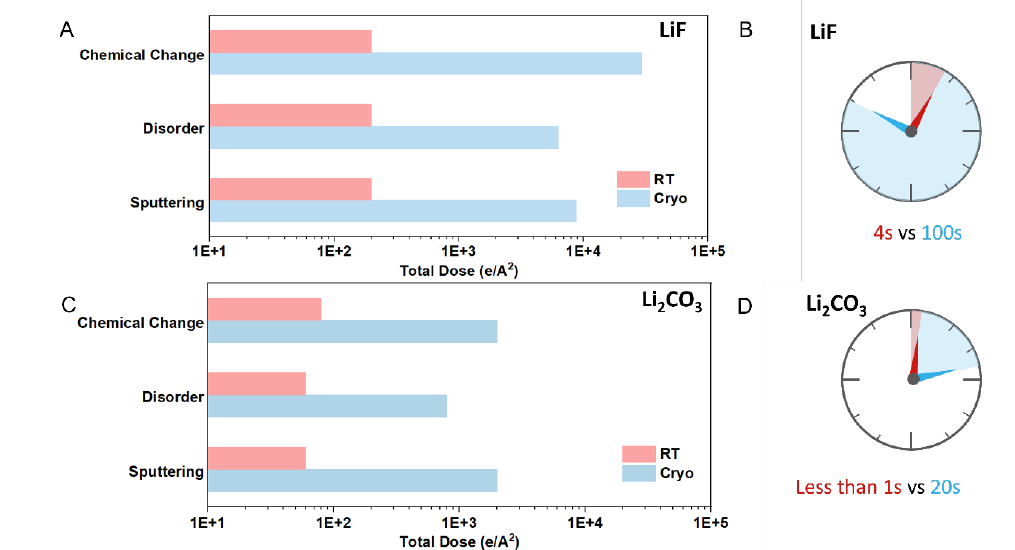
Controlled-potential liquid-cell electron microscopy is being developed to resolve fast interface events. Dose-aware acquisition, replicate cells, automated analysis, and independent measurements distinguish intrinsic behavior from imaging artifacts and make the resulting mechanisms more reproducible.

Bar charts comparing electron-beam damage thresholds for LiF and lithium carbonate at room and cryogenic temperatures.
Measured dose limits for beam-sensitive interface compounds. Bai et al., Joule (2026)
Research basis

Selected publications

Research approach

From observation to mechanism

Microscopy is most useful when it answers a controlled materials question. This approach pairs visible nanoscale events with independent measurements of chemistry, structure, and device behavior.

In situ electron microscopy

Liquid-cell, heating, and electrochemical experiments capture nucleation, growth, and interface changes as they happen.

Cryogenic and analytical microscopy

Cryogenic preparation and electron imaging, diffraction, and spectroscopy preserve and resolve sensitive battery interfaces.

Materials and device testing

Controlled synthesis, thin-film cells, electrochemical cycling, and impedance measurements connect local events to performance.

Correlative, quantitative analysis

Replicate experiments, dose controls, diffraction, spectroscopy, and matched bulk measurements test interpretations of nanoscale images.

Explore the published studies that underpin these research directions.

Browse publications